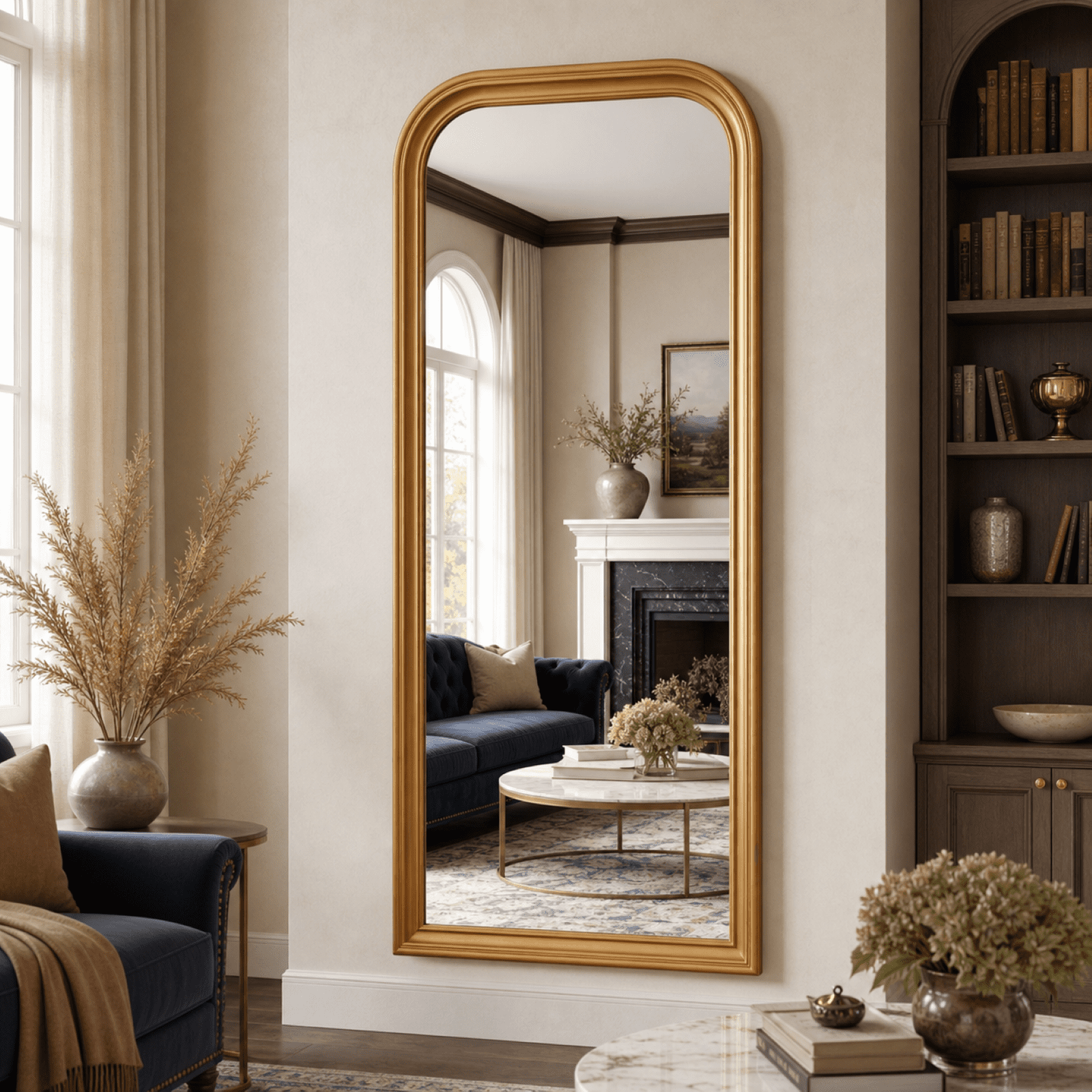
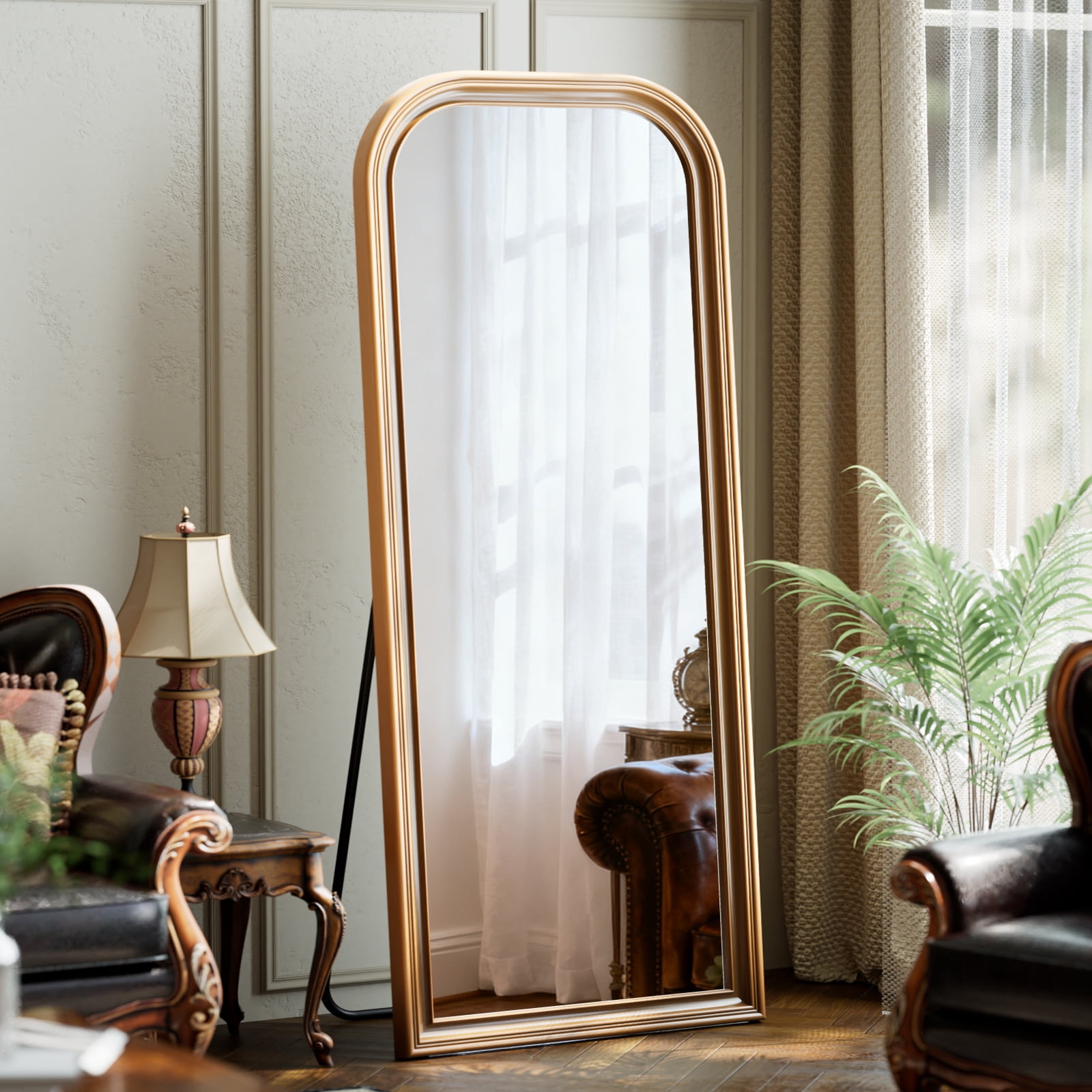
VORENTA 69"x28.5" Arched Full Length Mirror Vintage Floor Mirror, Antique Gold
Product details
| Management number | 251738632 | Release Date | 2026/09/26 | List Price | US$42.40 | Model Number | 251738632 | ||
|---|---|---|---|---|---|---|---|---|---|
| Category | |||||||||
<h2>VORENTA Vintage Arched Foor Mirror</h2> <p>✨ <b>Timeless Charm for Everyday Living</b></p> <p>Elevate your space with <b><i>VORENTA</i></b> vintage arched full-length mirror, featuring a round top and grooved frame. Blending classic elegance with modern function, it brings warmth, character, and refined style to any room. Whether placed in a bedroom, living room, or entryway, this mirror serves as both a practical full-body mirror and a striking decorative accent.</p>
-
✔ Vintage Design: Featuring a grooved frame with a rustic, wooden-like finish, this arched full-length mirror brings timeless vintage charm while elevating the sophistication of any space.
-
✔ Clear Reflection: Crafted with high-definition glass, this full-length mirror delivers crystal-clear, distortion-free reflections, helping you achieve accurate and effortless daily styling.
-
✔ Premium Materials: Built with shatter-proof glass and a high-quality, lightweight, water-resistant frame, this mirror enhances safety while ensuring long-lasting durability and reliability.
-
✔ Versatile Scenario: Designed for bedrooms, living rooms, or entryways, this mirror blends seamlessly with both modern and classic interiors, adding beauty and practicality to any room.
-
✔ Flexible Placement: Designed to stand freely, lean against the wall, or be securely mounted, this full-body mirror lets you choose the ideal setup based on your space and personal needs.
| Size | 69" x 28.5" |
|---|---|
| Shape | Arch |
| Mirror type | Floor Mirror |
| Mount type | Freestanding, Hanging |
| Features | Shatter Resistant Construction, Hooks |
| Frame material | PU |
| Has frame | Y |
| Brand | VORENTA |
| Color type | Gold |
| Frame color | Antique Gold |
| Photo frame color configuration | Antique Gold |
| Rec. room | Bedroom, Living Room, Entryway, Bathroom |
| Decor style | Modern, Contemporary |
| Pattern | Full Length Mirror |
| Theme | Modern |
| Weight | 26.24 lb |
| Model | VORENTA-1224 |
| Pieces | 1 |
Bestseller ranking
Shop All Mirrors
Correction of product information
If you notice any omissions or errors in the product information on this page, please use the correction request form below.
Correction Request Form